A Finding That Surprises People
Laboratory sleep restriction studies are among the tidiest experiments in metabolic research, because you can control the input precisely. Healthy young volunteers are kept to a restricted sleep schedule for a handful of nights and then given a glucose tolerance test.
The result is consistent and it is larger than most people expect: insulin sensitivity drops measurably, sometimes after a single restricted night, in people with entirely normal metabolic health. Nothing about their diet changed. Nothing about their activity changed. Only the sleep.
Why Short Sleep Does This
Cortisol runs higher in the evening
Sleep restriction pushes evening cortisol up. Cortisol raises blood glucose — that is part of its job — and it opposes insulin while doing so.
The hunger hormones move in the unhelpful direction
Ghrelin, which signals hunger, rises. Leptin, which signals fullness, falls. The subjective experience of that combination is wanting more food, and specifically wanting the kind that is fast to eat and dense in carbohydrate.
The sympathetic nervous system stays switched on
A tired body runs a little closer to alert than a rested one, and that state is not a glucose-storing state.
The compounding problem. Poor sleep raises glucose and increases appetite for exactly the foods that raise it further. Those two effects do not add, they multiply, which is why a bad week of sleep can look like a bad week of eating.
What Actually Helps
- A consistent wake time. More powerful than a consistent bedtime, and easier to control.
- Morning daylight. Ten minutes outside early anchors the circadian clock better than any amount of indoor lighting.
- Caffeine with a curfew. Its half-life runs around five hours, so a four o’clock coffee is still substantially present at nine.
- A cool, dark room. Core temperature has to drop for sleep to begin, and a warm room makes that harder.
- Alcohol understood properly. It shortens the time to fall asleep and wrecks the second half of the night.
Where Supplements Sit In This
Firmly downstream. There is no capsule that compensates for four hours a night, and GlycoAid does not claim to. It contains no caffeine and nothing stimulant-like, which at least means a morning capsule is not part of the problem.
One practical note on timing: the capsule is taken with breakfast for most people, and the nutrient side of the formula — Chromium in particular — has nothing to do with an evening routine either way.
The Uncomfortable Implication
If you are comparing your numbers week to week and you have not been tracking your sleep, you are missing one of the largest variables in the comparison. That matters for anyone trying to judge whether anything they have changed has done something — a diet, an exercise routine, or a supplement. Two hours a night of difference is quite enough to swamp a modest effect in either direction.
Questions
Questions On This Article
How much sleep is enough?
Most adults land between seven and nine hours. The consistency of the schedule matters alongside the total, and a regular wake time is the easiest lever.
Does one bad night really matter?
Laboratory studies have found measurable reductions in insulin sensitivity after a single restricted night in healthy volunteers.
Why am I hungrier when I am tired?
Ghrelin rises and leptin falls with sleep restriction, which is a hormonal push towards eating more and towards faster carbohydrate specifically.
Will a supplement fix sleep-related glucose changes?
No. Nothing in a supplement compensates for short sleep, and any product claiming otherwise is overselling.
Next
More From The Journal
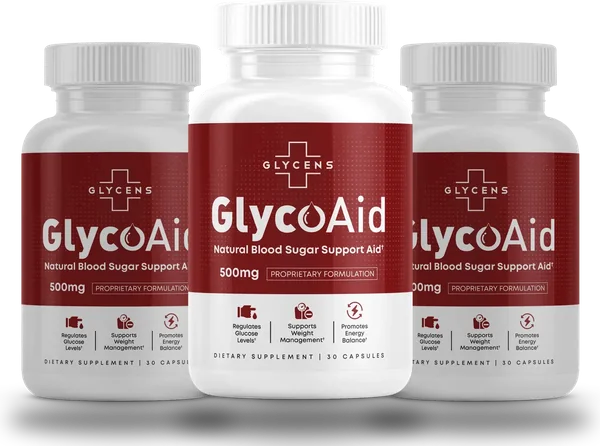
Start Your First Bottle Of GlycoAid
One capsule with a meal, a page here for every name on the label, and two months to send it back if it does nothing for you.
- One capsule a day, taken with food
- Fourteen ingredients, all named on the panel
- Free US delivery on the 3 and 6 bottle packs
- Sixty days to return it, opened bottles included